
Choosing the best home charger for a Tesla should be straightforward. In practice, the UK market makes it surprisingly easy to overpay. A 22 kW wallbox may look like an obvious upgrade over a 7.4 kW model, but every current European Tesla is limited to 7.4 kW on single-phase power or 11 kW on three-phase AC. Anything beyond that won’t make the car charge any faster.
The differences that matter are elsewhere. Some chargers work better with cheap overnight tariffs, while others make more sense for solar homes, and features such as built-in PEN protection, MID metering, or a tethered cable can change both installation cost and everyday convenience. Even two wallboxes with similar specifications can end up hundreds of pounds apart once installation is included.
So the best Tesla home charger isn’t necessarily the fastest or most expensive one. This guide compares six leading options for UK Tesla owners, including Tesla’s own Wall Connector, Easee, Zaptec, Wallbox, Zappi, and Ohme — with charging speeds, features, installation costs, and compatibility considered side by side.
Best Home Chargers for Tesla UK: Top Picks Compared
The Tesla Wall Connector Gen 3 is the best home charger for most Tesla owners, while Easee stand out for untethered flexibility, MID metering, and smart tariff savings, respectively.
One technical fact shapes every pick: Tesla Support EU confirms that the 7.4 kW / 11 kW AC ceiling applies across the current Model S, 3, X, and Y line-up. Therefore, wallboxes rated above 11 kW add nothing to a Tesla's charging speed.
|
Charger |
Price band |
Max power (1-ph / 3-ph) |
Cable |
Smart tariffs |
Solar |
Warranty |
|
Tesla Wall Connector Gen 3 |
££ |
7.4 / 22 kW |
Tethered, 7.5 m |
Via Tesla app |
No |
24 months |
|
Easee Charge Lite |
££ |
7.4 / 11 kW |
Untethered |
Yes |
No |
36 months |
|
Zaptec Go 2 |
££ |
7.4 / 22 kW |
Untethered |
Yes (OCPP 1.6J) |
No |
36 months |
|
Wallbox Pulsar Plus Socket |
££ |
7.4 / 22 kW |
Untethered |
Yes (OCPP 1.6j) |
Partial |
36 months |
|
Myenergi Zappi |
£££ |
7 / 22 kW |
Both versions |
Yes |
Yes, native |
36 months |
|
Ohme Home Pro |
££ |
7.4 kW |
Tethered |
Deepest (Octopus) |
No |
36 months |
UK Tesla forum owners echo this split: third-party units like Hypervolt earn praise for multi-year reliability, yet the most-cited Wall Connector perk remains the handle button that opens the charge port.
Tesla Wall Connector Gen 3: Best Overall for Tesla Owners
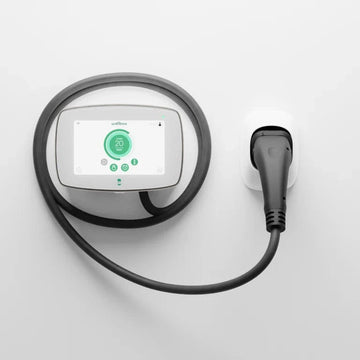
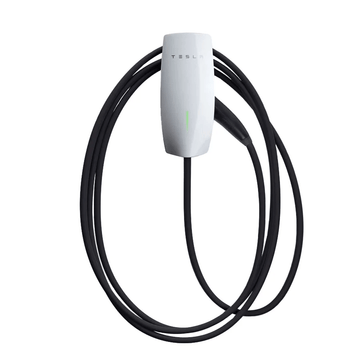
The Tesla Wall Connector Gen 3 delivers up to 22 kW / 32 A, comes with a tethered 7.5 m Type 2 cable, connects via Wi-Fi, and works with most EVs, not just Teslas, according to Tesla Support EU.
Tesla owners get perks that no rival matches. Pressing the button on the charging handle opens the charge port automatically, and scheduling runs natively through the Tesla app. The 24-month warranty also doubles what many third-party brands offer.
Power management is unusually flexible. Static mode lets the installer set a rate suited to your fuse board; Dynamic mode tracks spare capacity in real time with a Tesla-approved power meter (Gen 3 only, single unit); Group mode shares one circuit across up to six Gen 3 units. None of these requires an internet connection, so charging continues if Wi-Fi drops.
Two drawbacks: the unit lacks built-in PEN fault detection, so UK installations often need an external O-PEN device or earth rod, adding cost. The tethered design also removes any cable choice.
Easee Charge Lite: Best Compact Untethered Option
The Easee Charge Lite station delivers 11 kW on TN three-phase (3 × 16 A) and 7.4 kW on single-phase (1 × 32 A) through a Type 2 socket, according to the Easee product sheet (September 2024). At just 1.5 kg, with an IK10 impact rating and a −30 °C to +40 °C operating range, it is one of the smallest wallboxes on the market.
That 11 kW output matters: it exactly matches every European Tesla's three-phase AC ceiling, so the compact format sacrifices nothing in terms of real-world charging speed.
Two limitations deserve mention. First, external Type A RCD protection is required, which adds to the installation cost. Second, the unit is not MID-compliant, so it cannot support billing or expense claims where MID metering is mandated.
Also note that automatic phase balancing requires the separate Easee Equalizer accessory.
Zaptec Go 2: Best Feature Set in a Small Untethered Unit
The Zaptec Go 2 packs 22 kW at 32 A three-phase (TN) and 7.4 kW single-phase into a 1.6 kg unit, according to the June 2025 product sheet. Its Type 2 socket has an electronic lock that can be set to remain permanently locked, and the IP54 / IK10 housing operates from −30 °C to +50 °C.
Where it beats the Easee Charge Lite is in compliance. The Zaptec Go 2 includes integrated RDC-DD 6 mA DC protection to IEC 62955 and a MID Class B certified energy meter (EN 50470). That lets company-car drivers use its metering for mileage claims, something the Easee unit cannot support.
The hardware also supports OCPP 1.6J and ISO 15118, so it remains ready for smart tariff platforms and future plug-and-charge ecosystems as they roll out across the UK.
Wallbox Pulsar Plus Socket: Best for Flexible Supplies
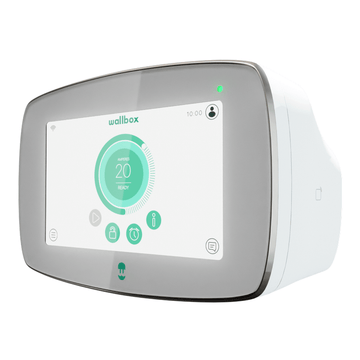
The Wallbox Pulsar Plus Socket delivers 22 kW at 32 A three-phase, 11 kW at 16 A three-phase, and 7.4 kW single-phase through a shuttered Type 2 socket compliant with NF C 15-100, according to the Wallbox datasheet (06/25).
Its standout feature is supply flexibility: the 22 kW unit can be installed on a single-phase supply and limited to 11 kW during installation. It adapts without replacement if you later upgrade the home supply or add a second EV.
Protection is handled by integrated 6 mA DC leakage detection that meets IEC 62955 tripping characteristics, inside an IP55 / IK10 housing with OCPP 1.6J support.
Temperature behaviour is clear too: full capacity is maintained up to 40 °C, with derating above that, and the unit is rated down to −30 °C.
Myenergi Zappi: Best for Solar Integration
The Myenergi Zappi is a 7 kW UK-favourite wallbox available in tethered and untethered versions, with dedicated Eco and Eco+ modes for solar and battery storage charging.
Solar households choose it because those modes divert surplus generation into the Tesla instead of exporting it to the grid. As a result, charging costs drop toward zero on sunny days, something no other charger on this list does natively.
Additionally, the Zappi includes built-in PEN fault protection. This avoids the cost of an external O-PEN device or earth rod that a UK Tesla Wall Connector installation may require.
Ohme Home Pro: Best for Smart Off-Peak Tariffs
The Ohme Home Pro is a 7.4 kW tethered smart charger with an on-unit screen and deep integration with time-of-use tariffs such as Octopus Intelligent Go.
Its real advantage is financial rather than technical. Ohme automatically schedules charging during the cheapest half-hour slots, which affects running costs more than any hardware specification, since overnight rates can be several times lower than standard electricity rates.
One caution: Tesla owners face a scheduling conundrum. When both the Ohme app and the Tesla app have charging schedules, conflicts can occur, so manage charging from one app only.
How to Choose a Home Charger for Your Tesla: Power, Amps, and Features
Start with the golden rule: actual charging power is always limited by the lowest of three ceilings. These are what the car's onboard charger accepts, what the wallbox delivers, and, on untethered setups, what the cable's PP resistor declares, according to Schneider Electric's Electrical Installation Guide and TE Connectivity's Type 2 specification.
For Teslas, the car sets the limit at 7.4 kW (32 A) on single-phase and 11 kW on three-phase power. Tesla recommends a 32 A circuit, and you can check your car's maximum amperage by tapping the lightning bolt icon on the touchscreen.
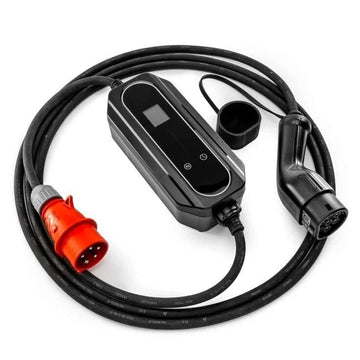
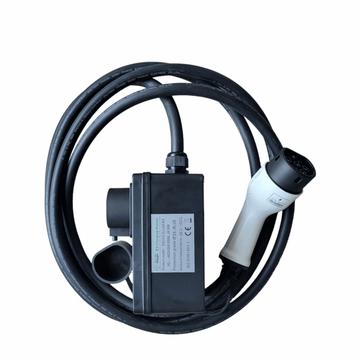
Next comes the tethered versus untethered decision. A tethered unit offers grab-and-go convenience because the cable hangs ready on the wall. An untethered socket future-proofs a mixed-EV household, but it needs the right cable: browse Tesla charging cables and pick a Type 2 cable rated for the full amperage, since an underrated cable silently throttles charging speed.
What about buying more power than the car can use? A 22 kW unit still makes sense if you expect a second, non-Tesla EV with a higher AC limit, which is why 22 kW home chargers remain the future-proof category despite the Tesla's 11 kW ceiling.
Finally, plan the physical and software fit. Model 3 and Model Y charge ports are located on the rear left, so mounting position and cable length matter; the Wall Connector's 7.5 m cable covers most driveways. Also consider app quality and OCPP support, because smart tariff pairing depends on the charger communicating reliably with your energy supplier's platform.

3kW vs 7kW vs 11kW: Which Charging Speed Do You Need for a Tesla?
A 7 kW wallbox is the sweet spot for most UK homes, since the vast majority have a single-phase supply. An 11 kW unit is only worth considering if you have three-phase power, and 3 kW is too slow to serve as your sole daily charging solution.
Tesla's own figures translate kilowatts into range simply: Model 3 and Model Y recover roughly 7 km of range per kW of charging power, while Model S and Model X recover around 5 km per kW. Tesla quotes up to 71 km of range per hour with the Wall Connector.
The maths favours 7 kW. At 7.4 kW, a Model 3 or Model Y adds roughly 50 km of range per hour, so an 8-hour overnight charging window comfortably restores 400 km of range. At around 3 kW, the same recovery takes more than twice as long, leaving no margin on high-mileage days.
The 22 kW myth deserves dispelling outright. No European Tesla charges above 11 kW AC because the onboard charger is the bottleneck, according to Tesla Support EU. Superchargers are faster only because DC charging bypasses the onboard charger entirely.
Your phase supply determines your real ceiling. Most UK houses have single-phase power, which caps AC charging at 7.4 kW regardless of the wallbox fitted. Three-phase upgrades are possible through your DNO, but they rarely pay off for a single Tesla, since the gain is 11 kW versus 7.4 kW at a substantial connection cost.
Can You Charge a Tesla at Home with a 3-Pin Plug?
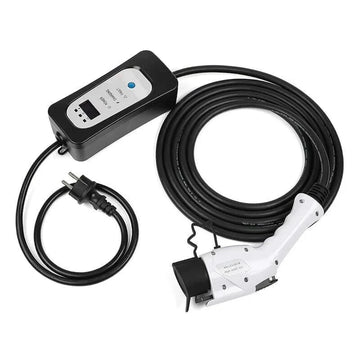
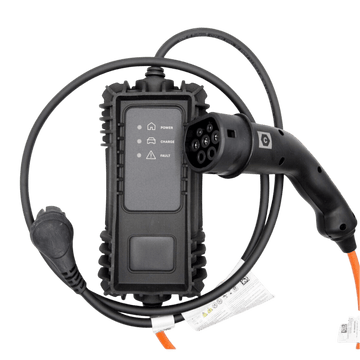
Yes, a Tesla can charge from a standard domestic socket at roughly 2.3 kW using the mobile connector, but this is suitable only for occasional top-ups, not daily charging.
The efficiency penalty is measurable. Of the five cars tested by ADAC, the Tesla Model Y showed the lowest household-socket losses at 12.7%, yet charging the same car on an 11 kW wallbox cut losses to 6.1%. Socket charging therefore wastes roughly twice as much energy, and you pay for every lost kilowatt-hour.
Safety is the bigger concern. Domestic sockets and ring circuits are not designed for sustained loads above 10 A over many hours, so heat builds up in old wiring, worn sockets, and especially extension leads, creating a genuine fire risk. A dedicated wallbox circuit with proper RCD protection removes that hazard entirely.
Keep the 3-pin option for holidays or emergencies. Never charge through an extension lead, and if socket charging is your interim solution while awaiting wallbox installation, have an electrician check the circuit first.

How Much Does It Cost to Install a Tesla Home Charger in the UK?
Budget £850–£1,800 all-in, split across three parts: hardware at roughly £450–£1,100, depending on the brand; standard installation at £400–£700 by a qualified electrician; and possible extras such as earthing protection or long cable runs.
Smart Home Charge quotes a Tesla Wall Connector installation from around £1,080. However, the Wall Connector lacks built-in PEN fault detection, so UK installations may need an external O-PEN device or an earth rod, adding to the cost. Chargers like the Zappi include PEN protection, which narrows the real price gap between the two.
Charger-specific extras matter too. The Easee Charge Lite requires an external Type A RCD, and a competent installer must include this in the quote rather than omit it.
Can you save money by fitting it yourself? Realistically, no. Part P of the Building Regulations and the BS 7671 wiring rules effectively require a qualified installer for a dedicated high-current circuit, and an uncertified installation can void your insurance and the charger warranty.
The payback case is strong regardless. Off-peak EV tariffs charge a fraction of the standard rate overnight, so a wallbox paired with a smart tariff typically pays for itself compared with public rapid charging within a few years at average mileage.
One caveat on subsidies: as of 2026, the OZEV EV chargepoint grant covers flat owners, renters, and landlords, but not most homeowners with driveways. Driveway owners should therefore budget the full amount rather than counting on support.

Are Tesla Home Chargers Worth It?
Yes, for most Tesla-only households, the Wall Connector Gen 3 justifies its price compared with similarly priced rivals. The build quality, 7.5 m tethered cable, port-opening handle button, three power-management modes, and 24-month warranty form a package that no third-party unit matches specifically for Tesla drivers.
However, several buyer profiles get better value elsewhere:
- Octopus Intelligent Go users: the Ohme Home Pro integrates more deeply with the tariff, and running-cost savings outweigh hardware perks.
- Solar households: the Zappi's Eco and Eco+ modes divert surplus generation that the Wall Connector cannot capture.
- Mixed-EV or future-proofing households: the untethered Zaptec Go 2 adds MID metering for mileage claims, while the Wallbox Pulsar Plus offers 22 kW headroom for a future non-Tesla EV.
- Anyone avoiding earthing extras: chargers with built-in PEN fault protection eliminate the need for the O-PEN device or earth rod that a Wall Connector installation may require.
On compatibility, Tesla confirms that the Gen 3 Wall Connector works with most EVs via its Type 2 plug. The buyer simply needs to check that the plug matches the car's inlet. However, scheduling and monitoring are optimised for Teslas, so households with two different brands often prefer a neutral unit.
Still weighing your options? Our best EV charger guide compares brands beyond the Tesla ecosystem.
Best Home Charger for Tesla: FAQ
These answers cover the questions UK Tesla owners ask most often before choosing and installing a home charger.
What Is the Best Home Charger for a Tesla in the UK?
The Tesla Wall Connector Gen 3 is the best choice for Tesla-only households, thanks to the port-opening handle button, native app integration, and 48-month warranty. However, the Ohme Home Pro is the better choice if you're on a smart tariff like Octopus Intelligent Go, while the Zaptec Go 2 suits buyers who want untethered flexibility with MID metering. The comparison table above breaks down each unit's specs.
Can You Use a Tesla Home Charger for Other Cars?
Yes, Tesla confirms that the Wall Connector Gen 3 is compatible with most electric vehicles, not only Teslas. The buyer's check is simple: the Type 2 plug must match the car's charging inlet, which covers nearly every current European EV.
However, scheduling and monitoring features work best with Tesla vehicles. Therefore, mixed-EV households may prefer an untethered third-party unit like the Zaptec Go 2.
Do I Need a Home Charger for My Tesla?
Not strictly, but a 7 kW wallbox is the cheapest and most convenient long-term option because off-peak tariffs can be several times cheaper than public rapid charging.
The 3-pin fallback exists, but it wastes more energy and time. ADAC measured 12.7% losses from a household socket for the Model Y versus 6.1% from a wallbox, and charging takes roughly three times longer.
What Is the Fastest Home Charger for a Tesla?
The practical maximum is 7.4 kW on a standard UK single-phase supply or 11 kW with three-phase power. Every current European Tesla caps AC charging at these levels because the onboard charger is the bottleneck, so a 22 kW wallbox charges the car no faster.
Superchargers exceed home charging speeds only because DC fast charging bypasses the onboard charger entirely, and that technology isn't available for domestic installation.
How Many Amps Do I Need for a Tesla Home Charger?
A 32 A single-phase circuit is the standard UK setup, delivering roughly 7.4 kW. Tesla recommends installing the Wall Connector on a 32 A circuit, and your installer will assess whether the home's electrical supply can handle it.
For three-phase homes, 16 A per phase delivers the full 11 kW. On untethered units, an appropriately rated11 kW Type 2 cable is essential because an underrated cable caps the charging speed.
Is There a UK Grant for Tesla Home Chargers?
Yes, but only for some households. The OZEV EV chargepoint grant covers up to £350 towards a chargepoint for flat owners, renters, and landlords.
Most homeowners with driveways no longer qualify because the homeowner scheme closed in 2022. Therefore, if you own a house, plan to fund the full installation yourself.
Eligible buyers must claim through an OZEV-approved installer, so confirm your installer's approval status before booking the work.
Choosing the right wallbox comes down to matching your home's supply to your Tesla's 11 kW AC ceiling, and every charger tested here does that job well. At evchargers.eu, we stock the full lineup covered above, from the Tesla Wall Connector Gen 3 to Easee, and Wallbox alternatives, so you can compare specifications side by side before committing.
If you are still weighing tethered against untethered, our team can help you pick the right cable and charging station for your setup. Browse the range, check what your supply can handle, and get your Tesla charging at full speed from day one.